




TEFLON®-coated antistatic glass fabrics (ATEX)
Apronor >
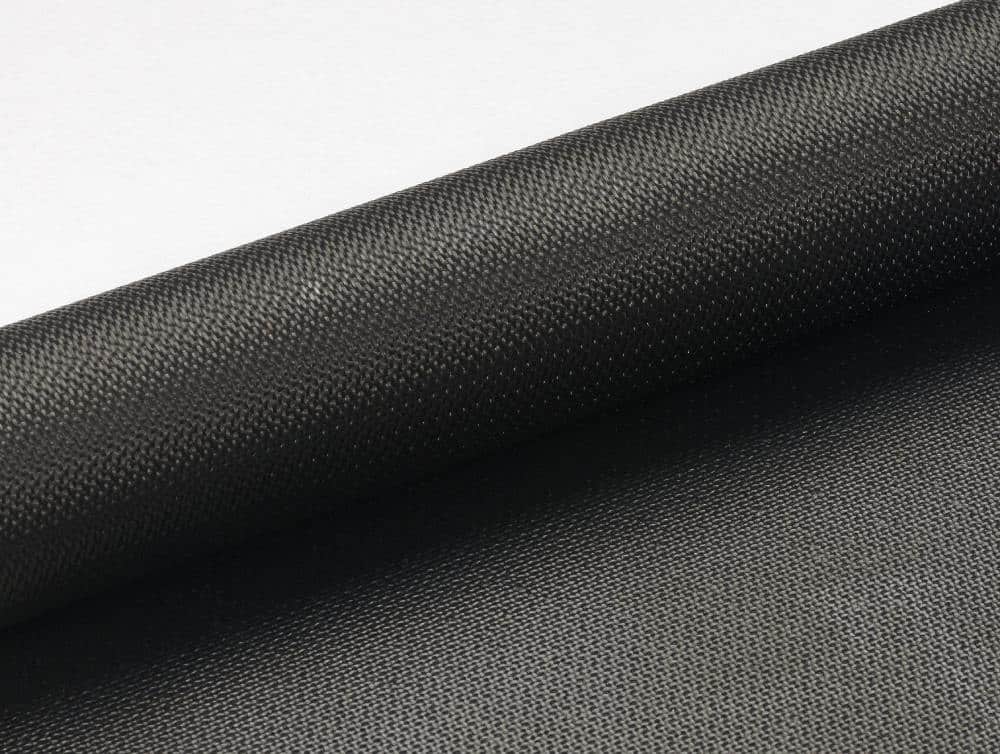
The combination of the performance of fibreglass and that of a perfectly uniform TEFLON® coating gives this technical textile antistatic and insulating properties. It is highly resistant to chemicals and temperature. It also has excellent thermal conductivity and dimensional stability and is non-toxic.
In our range of Apronor fabrics, this model is available in a satin weave. Available for the French and international markets, it is suitable for applications requiring minimum static electricity. It can therefore be used in a variety of environments, including ATEX.
A non-combustible textile with good resistance to chemical agents
TEFLON® (ATEX) coated glass fabric is characterised by:
- very good sliding properties;
- its temperature resistance (up to + 260°C continuously);
- thermostability;
- incombustibility;
- tensile strength;
- excellent durability.
Moreover, as this textile is antistatic, it eliminates the static electricity generated during use by friction, and which is responsible for the destruction of electrical components. It also prevents the creation of sparks, which provoke fires. Its excellent performance is due to its coating in TEFLON® or polytetrafluoroethylene, a plastic polymer discovered by chemist Roy J. Plunkett.
Applications of this technical fabric
The properties of TEFLON® coated glass fabric make it suitable for :
- insulation mats ;
- chemical protection.
Our main clients for this kind of textile are specialised in :
- distribution of plumbing, sanitary and heating tools and materials;
- the manufacture of thermal insulation mats for the safety of employees during maintenance work.
It can also be used in ATEX environments, where the risk of explosion is high due to the presence of combustibles or flammable substances (in the form of vapour, dust or gas, for example). As these areas are considered to be potentially dangerous, they must be clearly identified, delimited and indicated. Inside these areas, specific equipment must be used and people must be protected with special equipment. Our TEFLON®-coated glass fabric is one of the materials suited to these particular ATEX environments.
For more information on this textile, its conditions of use and a quotation, please contact our team.
- Incombustible
- Temperature resistance
- Insulating
- Natural material
- Ecologically pure and harmless to human health
- Foundry
- Thermal insulation and heat insulation
- Steel industry
- Glass industry
- Heat protection
Polytetrafluoroethylene (PTFE sign) – commonly called TEFLON® after the name of the trademark registered by the American company Dupont de Nemours – is a semi-crystalline, thermostable fluoropolymer (-200 ° C – + 260 ° C). The TEFLON® coating gives the textile a strong sliding power and improves resistance to chemical agents.
| Reference | Composition | Weight (g/m²) | Width (mm) | Length (ml) | Armor | Thickness(mm) | Photo |
| 3200 PTFE/ATEX | Fiberglass + ANTISTATIC PTFE | 560 | 1530 | 50 | Satin | 0.38 |  |
| 3200 PTFE | Fiberglass + ANTISTATIC PTFE | 560 | 1530 | 50 | Satin | 0.38 | |
Frequently Asked Questions (FAQ)
-
What is PTFE-coated glass fabric used for?
PTFE (polytetrafluoroethylene)-coated glass fabric combines the mechanical strength and heat resistance of fibreglass with the chemical inertness of PTFE. It is used in thermal insulation mats, chemical protection applications, conveyor belts in food processing, and ATEX environments where antistatic properties are required.
-
What is the difference between standard PTFE glass fabric and the antistatic ATEX version?
The standard version (3200 PTFE) provides non-stick, chemical resistance and heat resistance up to 260°C. The ATEX version (3200 PTFE/ATEX) additionally dissipates static electricity generated by friction, preventing spark formation. It is mandatory in ATEX zones (explosive atmospheres with flammable gases, vapours or dusts) as per Directive 2014/34/EU.
-
What temperature can PTFE-coated glass fabric withstand?
PTFE-coated glass fabric withstands temperatures from −200°C to +260°C continuously. Its thermostability makes it suitable for high-temperature industrial applications, including furnace environments and hot press moulding.
-
What is the chemical resistance of PTFE-coated fibreglass cloth?
PTFE offers near-universal chemical resistance: it withstands concentrated acids (sulphuric, hydrochloric, nitric), strong bases (caustic soda, potash), organic solvents, oils and hydrocarbons. Only alkali metal fluorides and molten alkali metals can attack it, making it the preferred choice for aggressive chemical environments.
-
Is PTFE glass fabric suitable for food contact applications?
PTFE is approved for food contact in many applications, including baking conveyor belts, oven liners and press moulds. Please contact our technical team for specific food-grade compliance documentation.
-
How is PTFE-coated glass fabric assembled or sewn?
Due to PTFE's non-stick properties, conventional adhesive bonding is difficult. Assembly is typically achieved by sewing with PTFE or high-temperature glass threads, stapling, or mechanical fastening. Specialist PTFE-compatible adhesives are also available for specific applications.