





Industrial insulation is a key factor in facility performance. It helps minimize energy loss, protect operators, and extend equipment lifespan. However, certain errors can reduce its effectiveness and lead to additional costs.
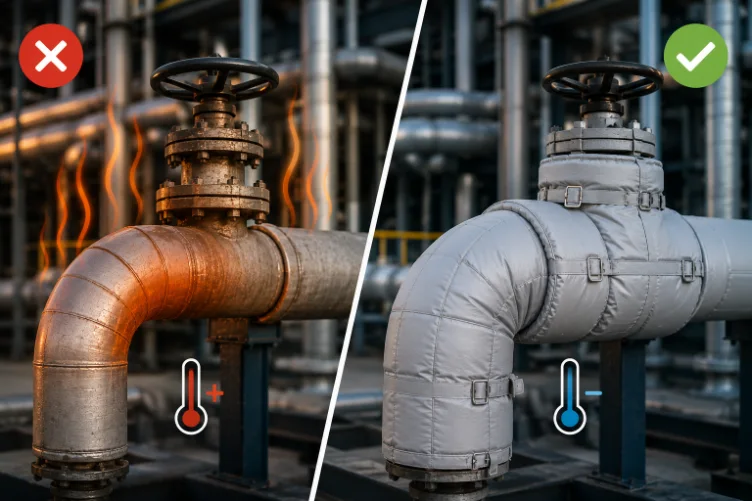
At Apronor, we assist manufacturers of insulation jackets in selecting technical materials suited to the specific constraints of each application. The choice of fabrics, threads, and accessories is crucial for ensuring the performance, durability, and safety of insulation solutions. Here are the most common mistakes.
The 4 most common mistakes
- Choosing unsuitable materials
Not all industrial facilities operate under the same conditions. Factors such as temperature, humidity, chemical environments, and mechanical stress must be considered right from the material selection stage for the insulation jacket.
- Neglecting certain equipment
While piping often comes to mind first, valves, flanges, pumps, and heat exchangers are also major sources of heat loss when not properly insulated. Each piece of equipment requires materials suited to its specific operating conditions.
- Overlooking maintenance requirements
Insulation jackets are frequently removed and reinstalled during maintenance operations. The materials and accessories used must therefore be durable and facilitate this repeated handling to ensure long-term performance.
- Focusing solely on energy savings
Thermal insulation serves purposes beyond just reducing energy consumption. It also contributes to operator safety by minimizing burn risks and enhances the reliability of industrial installations.
Best practices
To ensure high-performance, durable insulation, it is recommended to:
- select materials suited to the installation’s thermal, mechanical, and chemical constraints;
- take into account all equipment requiring insulation;
- prioritize components that withstand repeated maintenance operations; ● consult a specialist in technical materials to choose the most suitable solutions.
A closer look at specific technical materials
Depending on the application, various materials can be used to manufacture high-performance insulation jackets:
- Silicone-coated fabrics: excellent thermal resistance and good moisture protection.
- Silica fabrics with steel reinforcement: suitable for very high temperatures and demanding environments.
- Antistatic fabrics: recommended for areas where electrostatic charge control is essential.
- High-temperature sewing threads: ensure the mechanical strength of assemblies over time.
- Sliding buckles and fastening accessories: facilitate the installation, removal, and securing of insulation jackets during maintenance operations.
- Apronor’s advice
Apronor’s advice
The performance of an insulation jacket depends as much on its design as on the quality of its constituent materials. Selecting fabrics, threads, and accessories suited to operating conditions is essential to ensure effective, long-lasting insulation.
Apronor’s expertise
Apronor supports insulation jacket manufacturers by offering a wide range of technical textile materials and accessories selected to meet industry requirements. Our expertise enables us to guide each project toward the most suitable solutions in terms of thermal resistance, safety, durability, and ease of maintenance.